
Call us now :08045802283
 Send Inquiry

 Send Inquiry
Thermocouple Compensating Cable
Price 100 INR/ Meter
Thermocouple Compensating Cable Trade Information
- Minimum Order Quantity
- 100 , , Meter
- Supply Ability
- 1000 Per Month
- Delivery Time
- 7 Days
- Main Domestic Market
- All India
Thermocouple Compensating Cable About
Backed by a diligent team of professionals, we have been able to manufacture and export our clients a high quality range of Thermocouple Compensating Cable that is available in various thickness to suit the diverse requirements of the clients. It is manufactured by our professionals as per the latest market trends using high grade raw materials and advanced machinery. Widely acclaimed and demanded by our clients for its fine finish, durability and high tensile strength, the offered Thermocouple Compensating Cable is available at market leading prices.
Resistive up-to 300 Volts.
- Full corrosion resistant
- Strong electrical insulators
- Good oxidizing elements.
- Fully fire proof
- Lesser- higher frequency loss
- Durable and long lasting
- Perfectly adjustable in electronic products, military equipment, cars, constructions, etc.
Product details
|
Thermocouple Type |
J,K,T, R, S Type |
|
Size |
Customized |
|
Length |
Customized |
|
Country of Origin |
Made in India |
|
Material |
Stainless Steel |
|
Brand |
Customized |
|
Color |
Red, Yellow, Blue, Green, Black |
|
Accuracy |
Customized |
|
Number Of Core |
one , two, three |
|
Conductor Type |
Copper |
|
Usage/Application |
Used in Industries |
|
Power/Voltage |
220V |
Precision Signal Transmission for Industry
Rely on robust thermocouple compensating cables to guarantee accurate temperature signal transmission from your sensors to your control equipment. These cables are built to endure challenging environments, maintaining signal integrity through flexible, high-quality rubber, and copper construction. Our customizable sizes and lengths ensure that every industrial setup receives a perfect fit, supporting consistent operations across manufacturing plants and processing facilities.
Economical and Versatile Custom Solutions
Our compensating cables combine cost-efficiency with utility, using specialty alloys for effective yet affordable thermocouple signal extension. Users benefit from bespoke options, such as varied protective tube materials and color-coded design, simplifying installation and maintenance. As a supplier and manufacturer, we address industry requirements, supporting customers with quality products and dedicated service throughout India.
FAQ's of Thermocouple Compensating Cable:
Q: How is thermocouple compensating cable different from standard extension cable?
A: Thermocouple compensating cables use less expensive alloys than those in true thermocouple extension cables. They are specifically designed for transmitting signals from a thermocouple sensor to instrumentation over long distances, offering a cost-effective alternative for industrial applications.Q: What is the primary usage of compensating cables in industrial settings?
A: Compensating cables are used to extend the thermocouple signal from the sensor to instrumentation, ensuring accurate temperature readings over long distances within industrial environments such as manufacturing plants and processing units.Q: When should I consider using a compensating cable instead of an extension cable?
A: You should use a compensating cable when you need to connect thermocouple sensors over a considerable distance and want a more economical solution without compromising signal reliability, particularly in general industrial processes.Q: Where can these cables be installed within an industrial facility?
A: These cables can be installed throughout any industrial environment where thermocouple signals need to be sent from sensors to control or monitoring equipment, such as along production lines, in processing areas, or between machinery and centralized instrumentation.Q: What is the process for ordering customized thermocouple compensating cables?
A: To order customized cables, you need to specify your requirements including length, size, desired color, and any special protective tube materials. Our team then manufactures and supplies cables to match your exact industrial application needs.Q: How do the rubber and copper materials benefit cable performance?
A: Rubber provides excellent insulation and flexibility, protecting the cables in tough industrial environments, while copper ensures efficient electrical conductivity. This combination results in reliable and long-lasting cables suitable for rigorous industry use.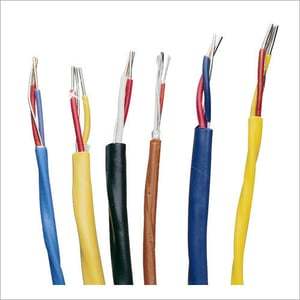


Tell us about your requirement

Price:
Quantity
Select Unit
- 50
- 100
- 200
- 250
- 500
- 1000+
Additional detail
Mobile number
Email

More Products in Thermocouple Cables Category
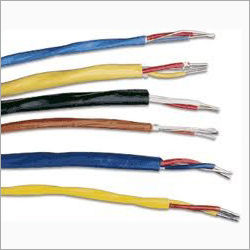
Thermocouple Cables
Price 100 INR / Meter
Minimum Order Quantity : 100
Dimension (L*W*H) : Custom as per cable size and requirement
Jacket Material : Other, PVC, PTFE, or Fiberglass
Features : High accuracy, flexible construction, durable, suitable for harsh environments
Locking Type : Standard thermocouple connector compatible

 Send Inquiry
Our Products


No.D/4, Avantika-II, Plot No. 502 A & 502 B, New Maniklal Estate, Narsi Mehta Marg, Ghatkopar West,Mumbai - 400086, Maharashtra, India

Mr Hiten Shah
(Proprietor)
Mobile :08045802283
 Send Inquiry
 Send SMS
 Call Me Free

Developed and Managed by Infocom Network Private Limited.
